Brain-Computer Interface: 5 Revolutionary Silent Search Methods
The Silent Revolution of Neural Search

For centuries, the only way to interact with the world around us, whether asking questions, searching for answers, or expressing intent, has been through physical effort. We type, we speak, we click, we gesture. But what if those barriers disappeared? What if your thoughts alone could trigger searches, retrieve information, and control digital environments without ever uttering a word or touching a screen? That’s exactly where the brain-computer interface (BCI) is taking us. Once the stuff of science fiction, this technology is now making waves in neuroscience, tech innovation, and digital interaction. At the centre of this revolution lies a silent search ability to search, navigate, and retrieve data solely through neural activity, without typing or talking. It's not only changing how we use technology but redefining what it means to interact with it. BCI technology creates a direct communication channel between the brain and digital systems, translating mental intent into real-world digital action. This goes far beyond convenience. For individuals with disabilities, empowerment is key. For researchers and tech developers, it's a new frontier. And for society at large, it signals the dawn of neural search, a paradigm shift where the mind is no longer constrained by physical interfaces. As we move into 2025, brain-computer interface applications are moving out of labs and into real life, supporting everything from virtual navigation to thought-controlled browsing. This blog dives deep into five revolutionary methods reshaping how we search in silence, explores the evolving tech landscape, addresses the ethical and practical concerns, and paints a comprehensive picture of what the future could hold.
Understanding Brain-Computer Interface Technology
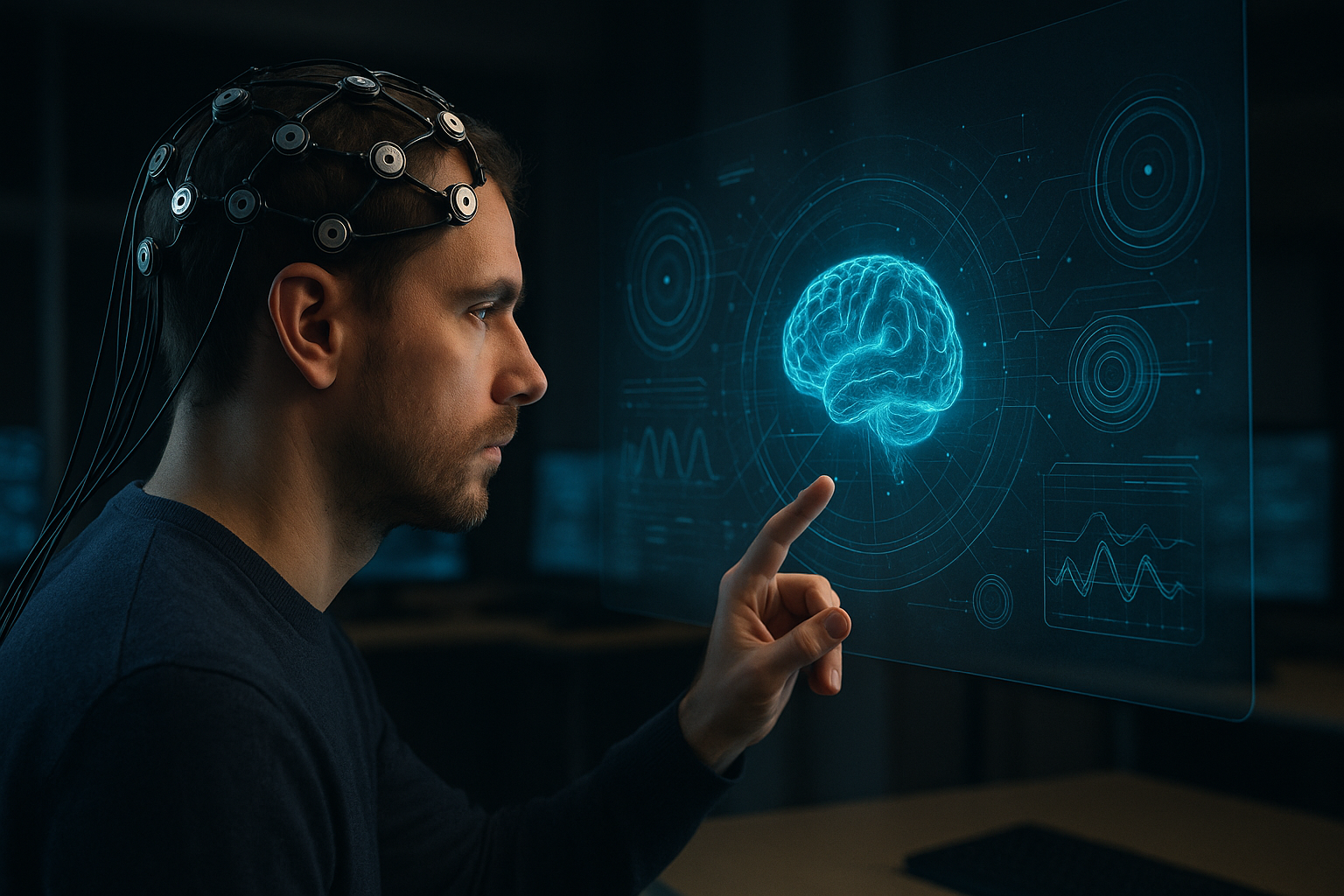
The foundation of silent search begins with understanding how a brain-computer interface creates a direct bridge between the human brain and machines. This isn’t just futuristic curiosity; it’s a rapidly evolving field that reshapes digital interaction in real-time.
What Is a Brain-Computer Interface?
- Definition and Core Purpose
A brain-computer interface (BCI) is a system that enables the brain to send commands directly to an external device, bypassing the traditional pathways of speech, touch, or movement. - Direct Neural Communication
Instead of relying on voice or keyboard, BCI technology translates brain signals into actionable digital outputs, enabling a new realm of silent search and interaction.
Types of BCI Systems in Use Today
- Invasive BCIs: High Accuracy, Surgical Requirement
- Implanted electrodes placed directly in brain tissue provide precise, high-resolution signals.
- Used in clinical trials for severe paralysis and neurological disorders.
- Pioneered by companies like Neuralink, Synchron, and Precision Neuroscience.
- Globally, fewer than 100 individuals have undergone permanent implant procedures.
- Implanted electrodes placed directly in brain tissue provide precise, high-resolution signals.
- Non-Invasive BCIs: Accessibility and Scalability
- Utilise external sensors, such as EEG (electroencephalography) headsets, to monitor brain activity through the scalp.
- Ideal for broader adoption due to their non-surgical nature, albeit with lower signal clarity.
- Increasingly applied in consumer-grade experiments and early-stage neural search systems.
- Utilise external sensors, such as EEG (electroencephalography) headsets, to monitor brain activity through the scalp.
How BCI Technology Powers Neural Interaction
- Signal Acquisition
- Electrodes capture real-time brain activity, focusing on electric fluctuations produced by thought patterns.
- Electrodes capture real-time brain activity, focusing on electric fluctuations produced by thought patterns.
- Feature Extraction
- Advanced algorithms identify meaningful patterns from complex brain signals for interpretation.
- Advanced algorithms identify meaningful patterns from complex brain signals for interpretation.
- Machine Learning & Signal Decoding
- Deep neural networks translate extracted patterns into commands, enabling interaction through thought.
- Deep neural networks translate extracted patterns into commands, enabling interaction through thought.
- Real-Time Execution
- The decoded commands are immediately executed by the system, such as initiating a search or moving a digital object.
- The decoded commands are immediately executed by the system, such as initiating a search or moving a digital object.
As we continue pushing the boundaries of brain-computer interface capabilities, this core framework becomes the bedrock for everything from silent communication to immersive, mind-driven neural search. Understanding this foundation is key to appreciating the radical ways BCI is reshaping search in silence.
Neural Foundations of Silent Search
To understand how silent search becomes a reality, we need to look at the brain’s remarkable ability to produce patterns of activity that reflect intention, focus, and cognition. Brain-computer interface technology taps into these signals, transforming thought into a tool for navigating the digital world.
How the Brain Generates Searchable Signals
- Natural Neural Activity
- Every thought, decision, or intent generates electrical activity in the brain.
- These signals originate in regions like the motor cortex, prefrontal cortex, and Broca’s area, depending on the task.
- Every thought, decision, or intent generates electrical activity in the brain.
- Silent Intent vs. Physical Action
- Thinking about an action, like moving a cursor or saying a word, can activate similar neural pathways to actually doing it.
- This overlap makes mental intent detectable without vocalisation or movement, forming the basis for silent search systems.
- Thinking about an action, like moving a cursor or saying a word, can activate similar neural pathways to actually doing it.
BCI Signal Processing: From Brain to Browser
- Signal Detection through Electrodes
- Non-invasive EEG sensors pick up brainwave patterns across alpha, beta, and gamma frequency bands.
- Non-invasive EEG sensors pick up brainwave patterns across alpha, beta, and gamma frequency bands.
- Feature Recognition and Noise Filtering
- Algorithms remove irrelevant electrical noise, isolating data points that reflect genuine search intent.
- Attention peaks, imagined speech, or target-focused brain responses serve as key inputs.
- Algorithms remove irrelevant electrical noise, isolating data points that reflect genuine search intent.
- Pattern Mapping with Machine Learning
- Using past neural data, BCI technology learns to distinguish between different types of intent, such as selecting an item or initiating a query.
- Using past neural data, BCI technology learns to distinguish between different types of intent, such as selecting an item or initiating a query.
- Command Execution and Feedback
- Once a pattern is decoded, it’s converted into a digital command.
- Feedback loops help users understand when their thoughts were recognised correctly, reinforcing control over time.
- Once a pattern is decoded, it’s converted into a digital command.
Why It Works for Search
- Semantic Intent over Syntax
- Unlike keyword-based systems, neural search looks at conceptual intent, how the brain frames a need or question internally.
- Unlike keyword-based systems, neural search looks at conceptual intent, how the brain frames a need or question internally.
- Adaptive to User Thought Patterns
- Over time, BCI systems adapt to individual neural quirks, making silent search increasingly personalised and efficient.
- Over time, BCI systems adapt to individual neural quirks, making silent search increasingly personalised and efficient.
The brain-computer interface isn’t just reading electrical activity; it’s learning to understand the meaning behind thought. This shift from mechanical input to mental communication is what powers the quiet revolution of silent search.
Five Revolutionary Silent Search Applications
As brain-computer interface technology matures, real-world applications of silent search are becoming more tangible and powerful. Here are five groundbreaking use cases redefining how we interact with digital systems using only thought.
- Neural-Controlled Web Browsing
With BCI-driven interfaces, users can browse the internet without touching a keyboard or screen. Thought becomes the new click.
- Cursor Navigation via Neural Intent
- Users can move cursors across screens using imagined motion, without hand gestures or physical movement.
- Users can move cursors across screens using imagined motion, without hand gestures or physical movement.
- Click and Select Without Interaction
- Eye fixation and intent-based brain signals trigger click commands on links, buttons, and UI elements.
- Eye fixation and intent-based brain signals trigger click commands on links, buttons, and UI elements.
- Text Input by Mental Selection
- BCI systems use P300 signals, brainwaves triggered by recognition, to help users select letters and compose text.
- BCI systems use P300 signals, brainwaves triggered by recognition, to help users select letters and compose text.
- Breakthrough for Accessibility
- Research shows patients with paralysis can type up to 32 characters per minute using BCI-powered virtual keyboards.
- Research shows patients with paralysis can type up to 32 characters per minute using BCI-powered virtual keyboards.
This form of silent search is transforming digital access—especially for users with mobility limitations.
- Thought-Based Information Retrieval
Neural search tools now retrieve information by interpreting your thoughts directly; no need to form a complete verbal or written query.
- Semantic Recognition Beyond Keywords
- BCI systems analyse how the brain frames meaning, rather than focusing on literal word choice.
- BCI systems analyse how the brain frames meaning, rather than focusing on literal word choice.
- Deep Learning Models for Personalisation
- Neural networks refine their understanding of each user’s cognitive language over time, adapting to individual thought styles.
- Neural networks refine their understanding of each user’s cognitive language over time, adapting to individual thought styles.
- Dynamic Ranking Based on Thought Strength
- Stronger neural responses can boost the relevance of search results, tailoring them in real-time.
- Stronger neural responses can boost the relevance of search results, tailoring them in real-time.
- Conceptual Search, Not Just a Literal Match
- Users don’t need to remember exact terms—thinking about an idea or topic is often enough to generate accurate results.
- Users don’t need to remember exact terms—thinking about an idea or topic is often enough to generate accurate results.
This method rewrites the rules of search optimisation, making information retrieval faster, more intuitive, and uniquely human.
- Silent Communication Systems
In settings where speaking is impractical or impossible, BCI technology enables covert, brain-driven interaction and silent search capabilities.
- Subvocal Signal Detection
- Devices like MIT’s AlterEgo detect inner speech—words you "say" in your mind but don’t vocalise.
- Devices like MIT’s AlterEgo detect inner speech—words you "say" in your mind but don’t vocalise.
- Discreet Interaction in Shared Spaces
- Search queries and messages can be sent silently, useful in boardrooms, libraries, or noisy environments.
- Search queries and messages can be sent silently, useful in boardrooms, libraries, or noisy environments.
- Enhanced Accessibility for the Speech-Impaired
- People with ALS, stroke-related aphasia, or vocal cord injuries gain a path to express their thoughts and ask questions.
- People with ALS, stroke-related aphasia, or vocal cord injuries gain a path to express their thoughts and ask questions.
- Emotionally Neutral Search
- Silent communication avoids tone misinterpretation, allowing clean data retrieval without emotional noise.
- Silent communication avoids tone misinterpretation, allowing clean data retrieval without emotional noise.
This technology doesn’t just support the voiceless; it gives everyone a new way to be heard without speaking.
- Cognitive Load-Optimised Search
Brain-computer interfaces are now intelligent enough to detect when your brain is overwhelmed and adjust search output accordingly.
- Real-Time Attention Monitoring
- EEG-based BCI systems track mental fatigue, stress, and distraction levels to gauge readiness for complex content.
- EEG-based BCI systems track mental fatigue, stress, and distraction levels to gauge readiness for complex content.
- Dynamic Result Simplification
- When cognitive load is high, search results are simplified to improve comprehension and reduce overload.
- When cognitive load is high, search results are simplified to improve comprehension and reduce overload.
- Predictive Neural Search Paths
- The system anticipates what users are looking for before they complete a query, based on thought context and neural trends.
- The system anticipates what users are looking for before they complete a query, based on thought context and neural trends.
- Adaptive Personalization
- Over time, BCI models learn how each brain reacts under pressure, tailoring results for optimal timing and depth.
- Over time, BCI models learn how each brain reacts under pressure, tailoring results for optimal timing and depth.
It’s not just about what you want to find, but how ready your brain is to receive it.
- Virtual Reality Neural Navigation
The combination of BCI technology and immersive digital environments opens up exciting new dimensions in silent search.
- Navigating Virtual Worlds Through Thought
- Users mentally direct movement within 3D or augmented environments, such as walking through a digital library, using only their focus.
- Users mentally direct movement within 3D or augmented environments, such as walking through a digital library, using only their focus.
- Accessing Layered Information Intuitively
- Simply thinking about an object can pull up relevant data—bios, details, links—without clicks or menus.
- Simply thinking about an object can pull up relevant data—bios, details, links—without clicks or menus.
- Interacting with Digital Objects Hands-Free
- Mental intention replaces the controller, allowing manipulation of items within AR/VR spaces.
- Mental intention replaces the controller, allowing manipulation of items within AR/VR spaces.
- Use in Therapy, Education, and Design
- From cognitive rehabilitation to architectural walkthroughs, BCI-driven VR supports deeper learning and accessibility.
- From cognitive rehabilitation to architectural walkthroughs, BCI-driven VR supports deeper learning and accessibility.
This convergence of virtual environments and brain-computer interface innovation is redefining how we experience digital information.
From thought-based typing to immersive neural exploration, these five silent search applications demonstrate the immense potential of BCI technology to change not only how we search, but how we think about searching.
Future of BCI-Powered Search Optimisation

As the brain becomes a functional input device, the future of brain-computer interface systems lies in scalability, accessibility, and AI-enhanced precision. Silent, intuitive, and deeply personal, neural search is moving from prototype to everyday use.
Trends Driving the Next Generation of BCI Search
- Artificial Intelligence Integration
- AI models are dramatically improving how neural data is decoded, allowing real-time interpretation of subtle brain signals.
- This enables silent search systems to become more responsive, accurate, and natural to use.
- AI models are dramatically improving how neural data is decoded, allowing real-time interpretation of subtle brain signals.
- Wearable BCI Devices for Everyday Use
- Bulky EEG caps are giving way to compact, comfortable headsets that can be worn throughout the day.
- These portable tools allow continuous interaction with digital systems through BCI technology.
- Bulky EEG caps are giving way to compact, comfortable headsets that can be worn throughout the day.
- Haptic Feedback Loops
- Future systems will not just read your brain; they’ll communicate back through tactile or sensory feedback.
- Users could "feel" confirmation of a search result or command through vibration or pressure signals.
- Future systems will not just read your brain; they’ll communicate back through tactile or sensory feedback.
Evolving Neural Search Capabilities
- Contextual Understanding at Deeper Levels
- The goal isn’t just recognising words or objects, but understanding abstract queries, questions formed by emotion, intuition, or indirect association.
- The goal isn’t just recognising words or objects, but understanding abstract queries, questions formed by emotion, intuition, or indirect association.
- Multilingual and Nonverbal Query Recognition
- BCI systems are developing the ability to process thought-based intent across languages and even nonverbal concepts, making neural search globally accessible.
- BCI systems are developing the ability to process thought-based intent across languages and even nonverbal concepts, making neural search globally accessible.
- Adaptive Cognitive Mapping
- Over time, brain-computer interfaces create personalised neural profiles, improving accuracy and prediction for each user.
- Over time, brain-computer interfaces create personalised neural profiles, improving accuracy and prediction for each user.
Market Momentum and Real-World Impact
- Massive Industry Growth
- The brain-computer interface market is projected to grow from $2.1 billion in 2023 to $4.5 billion by 2029, signalling rapid commercial readiness.
- The brain-computer interface market is projected to grow from $2.1 billion in 2023 to $4.5 billion by 2029, signalling rapid commercial readiness.
- Application Expansion
- From gaming and productivity to healthcare and education, silent search is set to influence countless sectors.
- From gaming and productivity to healthcare and education, silent search is set to influence countless sectors.
The future of BCI technology is not just about control—it’s about cognition, personalisation, and presence. As neural interfaces mature, so too will the way we retrieve, engage with, and internalise information in the most human way possible: through thought.
Challenges and Considerations
While the promise of brain-computer interface technology is profound, its path to mainstream silent search adoption comes with a range of technical, ethical, and practical challenges. These issues are not roadblocks—they’re realities we must confront to build a responsible future for neural search.
Technical Limitations Holding Back BCI Scalability
- Signal Strength in Non-Invasive Systems
- External sensors, such as EEG, struggle to capture clean, high-resolution brain data due to interference from hair, skin, and environmental noise.
- This leads to lower accuracy in real-time silent search commands compared to invasive systems.
- External sensors, such as EEG, struggle to capture clean, high-resolution brain data due to interference from hair, skin, and environmental noise.
- Individual Brain Variability
- Every brain is unique. The same mental task can produce different patterns across users, requiring systems to undergo personal calibration for each individual.
- Every brain is unique. The same mental task can produce different patterns across users, requiring systems to undergo personal calibration for each individual.
- Processing Power Requirements
- Decoding brain signals into actionable outputs demands immense computational power, especially when layered with AI for adaptive learning.
- Decoding brain signals into actionable outputs demands immense computational power, especially when layered with AI for adaptive learning.
Ethical and Privacy Concerns
- Neural Data Security Risks
- Brain signals contain deeply personal information—thoughts, intentions, emotional states—that could be misused if accessed without consent.
- Brain signals contain deeply personal information—thoughts, intentions, emotional states—that could be misused if accessed without consent.
- Ownership of Cognitive Data
- Legal frameworks have not yet caught up to define who owns neural data, how it’s stored, or what protections should exist.
- Legal frameworks have not yet caught up to define who owns neural data, how it’s stored, or what protections should exist.
- Risk of Cognitive Surveillance
- There’s a fine line between enabling silent search and creating systems that could potentially track, predict, or manipulate thought.
- There’s a fine line between enabling silent search and creating systems that could potentially track, predict, or manipulate thought.
Accessibility and Cost Barriers
- Current Expense of BCI Technology
- High-precision brain-computer interface systems are still costly, limiting access to elite research institutions and medical trials.
- High-precision brain-computer interface systems are still costly, limiting access to elite research institutions and medical trials.
- Usability and Learning Curve
- Learning to “think in commands” isn’t intuitive. Even with training protocols, users often face frustration during the adaptation period.
- Learning to “think in commands” isn’t intuitive. Even with training protocols, users often face frustration during the adaptation period.
Despite these hurdles, progress is steady. Recognising these challenges ensures that BCI technology evolves with ethics and empathy at its core. By addressing them head-on, we can ensure neural search serves all, not just the few.
Implementation Strategies for Silent Search
Making silent search a practical reality requires more than hardware; it demands thoughtful system design, human-centric training, and hybrid input methods. The transition from experimental brain-computer interface to everyday neural search begins with how we teach, design, and integrate.
Training Users to Think in Commands
- Motor Imagery Practice
- Users learn to consistently imagine movements, like moving a hand or pressing a key, to create repeatable neural patterns.
- This consistency is key to accurate signal recognition across sessions.
- Users learn to consistently imagine movements, like moving a hand or pressing a key, to create repeatable neural patterns.
- Real-Time Feedback Loops
- Interactive training environments show immediate system responses to user thoughts, helping users refine their mental focus.
- Interactive training environments show immediate system responses to user thoughts, helping users refine their mental focus.
- Personalised Calibration Protocols
- No two brains are the same. Adaptive systems are needed to fine-tune performance for individual neural signatures over time.
- No two brains are the same. Adaptive systems are needed to fine-tune performance for individual neural signatures over time.
Combining Modalities for Better Interaction
- Multi-Modal Interfaces
- Fusing BCI technology with other inputs, such as eye-tracking, speech, or gesture, enhances usability and error correction.
- For instance, a user might think to initiate a search and use eye focus to select results.
- Fusing BCI technology with other inputs, such as eye-tracking, speech, or gesture, enhances usability and error correction.
- Fallback Systems
- Voice recognition or gesture-based tools serve as backups when neural signals are unclear or momentarily inconsistent.
- Voice recognition or gesture-based tools serve as backups when neural signals are unclear or momentarily inconsistent.
- Fluid Task Switching
- Systems must intelligently toggle between control modes based on context, restoring user agency and reducing frustration.
- Systems must intelligently toggle between control modes based on context, restoring user agency and reducing frustration.
Optimising Content for Neural Search
- Conceptual and Semantic Design
- Because neural search focuses on meaning, not keywords, content must reflect user intent through well-structured, semantically rich language.
- Because neural search focuses on meaning, not keywords, content must reflect user intent through well-structured, semantically rich language.
- Layered Information Architecture
- Intuitive layers of information make it easier for users to mentally navigate content, retrieving answers with fewer cognitive leaps.
- Intuitive layers of information make it easier for users to mentally navigate content, retrieving answers with fewer cognitive leaps.
- Accessibility Across BCI Channels
- Visual, auditory, and haptic design considerations ensure that content remains usable across various brain-computer interface formats.
- Visual, auditory, and haptic design considerations ensure that content remains usable across various brain-computer interface formats.
These strategies aren't just technical; they’re human. They prioritise comfort, clarity, and cognition, ensuring that silent search becomes a natural extension of thought, rather than a mechanical replacement for touch.
The Path to Mainstream Adoption
The evolution of brain-computer interface systems from lab-bound experiments to everyday tools hinges on infrastructure, affordability, and cultural readiness. The path to universal silent search isn’t linear, but it is accelerating.
Projected Timeline of BCI Integration
- 2025–2027: Entry-Level Non-Invasive BCI Devices
- Affordable EEG-based headsets will begin entering the consumer market for basic functions like cursor control and simplified neural search commands.
- Affordable EEG-based headsets will begin entering the consumer market for basic functions like cursor control and simplified neural search commands.
- 2028–2030: Medical-Grade Implants and Regulatory Approval
- Implanted BCI systems are expected to secure FDA and global approvals for clinical uses, such as neurorehabilitation and motor restoration.
- Implanted BCI systems are expected to secure FDA and global approvals for clinical uses, such as neurorehabilitation and motor restoration.
- Early 2030s: Widespread Integration into Daily Life
- BCI technology will see inclusion in healthcare plans, education tools, gaming, and even enterprise workflows, normalising silent search as part of routine interaction.
- BCI technology will see inclusion in healthcare plans, education tools, gaming, and even enterprise workflows, normalising silent search as part of routine interaction.
Catalysts for Adoption
- Ageing Global Population
- Rising rates of neurological conditions such as ALS, Parkinson’s, and stroke are creating urgent demand for neural interfaces that support independence.
- Rising rates of neurological conditions such as ALS, Parkinson’s, and stroke are creating urgent demand for neural interfaces that support independence.
- Tech Convergence
- Advances in AI, machine learning, cloud computing, and wearable sensors are converging to make brain-computer interface systems smarter and lighter.
- Advances in AI, machine learning, cloud computing, and wearable sensors are converging to make brain-computer interface systems smarter and lighter.
- Workplace Optimization
- The average employee spends over 2.5 hours daily searching for information. Neural search tools could slash that time with instant, intent-based retrieval.
- The average employee spends over 2.5 hours daily searching for information. Neural search tools could slash that time with instant, intent-based retrieval.
Economic and Investment Drivers
- Venture Capital Acceleration
- Major investments are fueling innovation, with startups in BCI technology attracting funding from both private tech giants and public research bodies.
- Major investments are fueling innovation, with startups in BCI technology attracting funding from both private tech giants and public research bodies.
- Government and Military Interest
- Several nations are exploring silent search tools for secure communication, battlefield command, and rehabilitation for veterans.
- Several nations are exploring silent search tools for secure communication, battlefield command, and rehabilitation for veterans.
The transition from novelty to necessity is already underway. The more we understand what fuels and funds this shift, the better we can prepare for a society where the brain-computer interface isn’t a tool of the future, but a feature of everyday life.
Embracing the Neural Search Revolution
The integration of brain-computer interface technology into our daily lives is no longer a question of “if,” but “how soon.” As we move beyond keyboards, screens, and even voice commands, we’re stepping into a world where silent search, the ability to think and receive without speaking or typing, becomes not just possible but preferable. This shift isn't about replacing existing methods of interaction; it's about enhancing them, offering more intuitive, accessible, and deeply human ways to engage with the digital universe. From restoring agency to people with disabilities to revolutionising productivity and immersion in virtual spaces, BCI technology stands at the crossroads of empathy and innovation. What makes this revolution truly profound is its capacity to understand not just what we do, but how we think. Neural search reframes the search process itself not as a mechanical action, but as a cognitive exchange. It’s a technology that learns from us, responds to us, and in time, may even anticipate our needs. But with this promise comes responsibility. Ensuring ethical safeguards, equitable access, and data privacy must be as much a part of the conversation as signal decoding and AI integration. Organisations, educators, developers, and policy makers must begin preparing now for a future where brain-computer interfaces are not merely advanced hardware, but essential platforms for communication, exploration, and inclusion. The interfaces of tomorrow will not sit on our desks or live in our pockets; they’ll align with our minds. And in doing so, they will reshape how we ask, how we learn, and how we connect with the digital world and with each other. The future of search is not only silent; it’s neural, intuitive, and profoundly human.